



NEWS and ANNOUNCEMENTS
-
Jan 11, 2026
Fire Management and Silviculture in Oak Ecosystems
Prescribed fire is a crucially important management tool for oaks. Presenters will discuss prescribed fire as well as the importance of… More -
Jan 11, 2026
Oak Woodlands & Forests Fire Consortium Webinar - Developing new fuel models for fire modeling of novel ecosystems in the Cross Timbers ecoregion
We modeled test burns in mechanically treated and untreated ERC-encroached Cross Timbers forests to assess common fire modeling program… More -
Jan 11, 2026
Fueling Collaboration Panel Discussion Series - Storms and Strategy: Understanding the Impacts of Hurricanes on Wildfire and Prescribed Fire in the Southeast
In this Fueling Collaboration panel discussion, we’ll dive into the complex relationship between hurricanes and wildland fire. Join… More -
Jan 10, 2026
Fire Lines Volume 15, Issue 8
Fire Science | Research Brief | Technology | New Publications | In the Field | SFE Products | The Brush… More
Visit the Wildland Fire Resources Library
-
Mar 19, 2024
DOI Nature-based Solutions Roadmap
The purpose of the Department of the Interior Nature Based Solutions Roadmap is to provide Department of the Interior (DOI) staff with… More -
Oct 30, 2023
Opportunities for Research on Carbon Sequestration in Longleaf Pine Ecosystems
As a result of the Fact Sheet on Opportunities for Research on Carbon Sequestration in Longleaf Pine Ecosystems by Kevin Robertson, Ph.D.,… More -
Oct 03, 2023
Mapping Fires Across the Southeast-Science to Solutions
The Southeast fire map (SE FireMap), funded by NRCS and managed by Working Lands for Wildlife staff, aims to develop a fire tracking map to… More
Key Issues:
Prescribed Burning
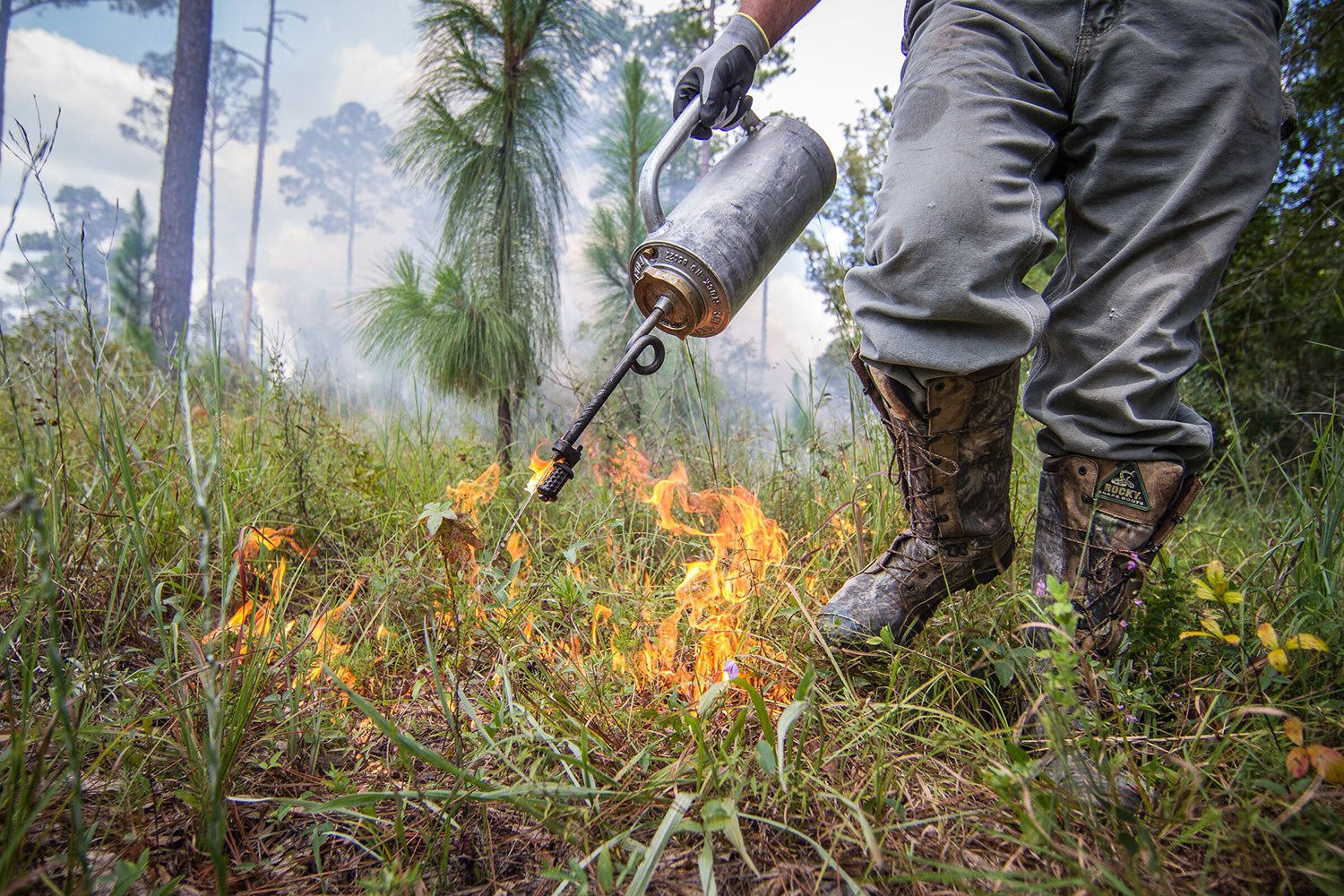
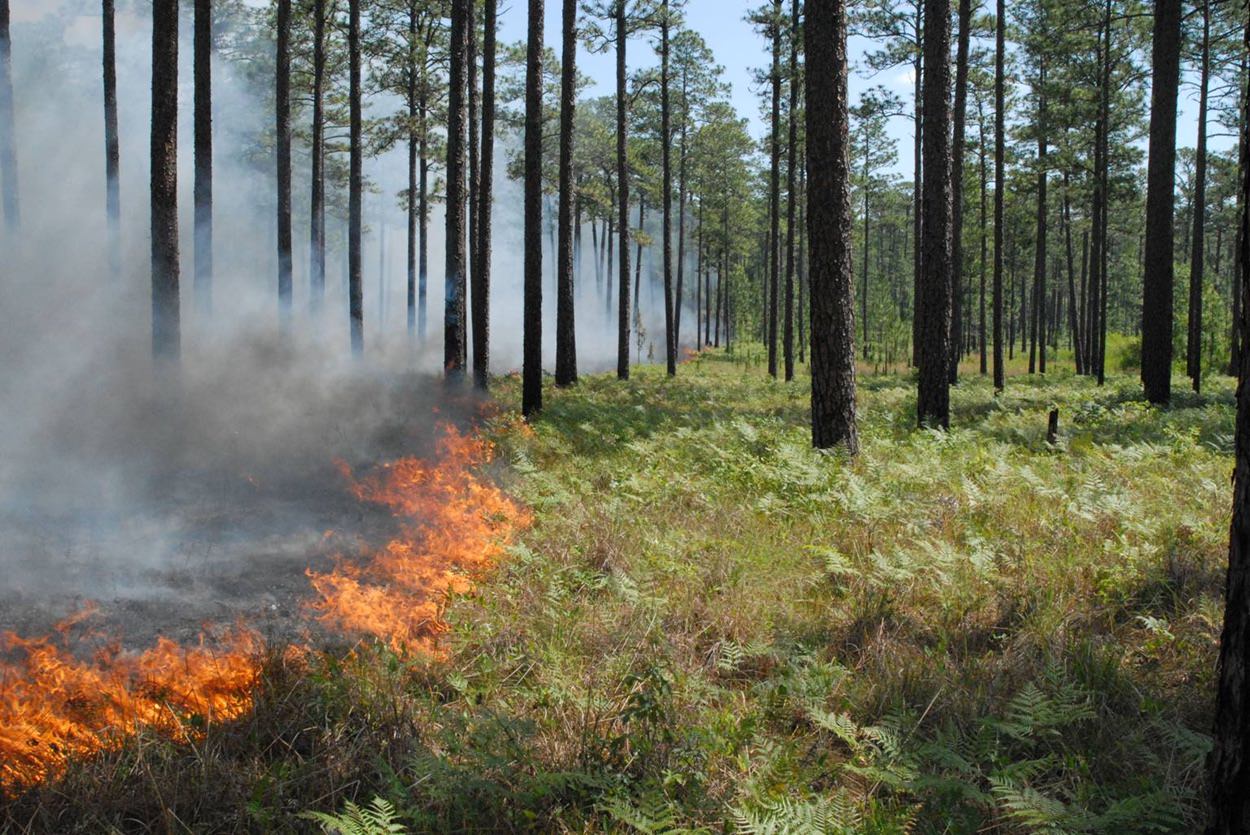
Prescribed fire, also known as controlled burning, refers to the controlled application of fire to help restore health to fire-adapted environments, benefitting wildlife and timber values. Prescribed fire reintroduces the beneficial effects of fire into an ecosystem, producing the kinds of vegetation and landscapes we want, and reducing the hazard of catastrophic wildfire caused by excessive fuel buildup.
Wildfire
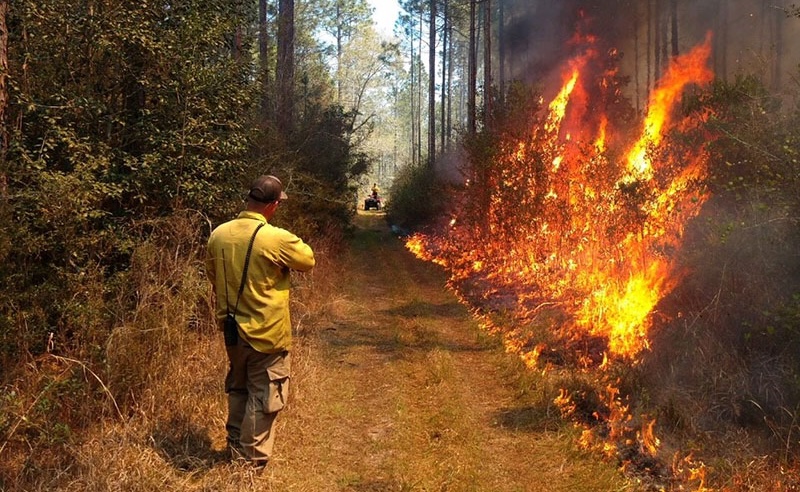
The Southeast has a complex fire environment unlike any other in the nation. While fire has long played a critical role in the landscapes across the Southeast, it is becoming increasingly difficult for agencies, organizations, and landowners to plan for and respond effectively to wildfire, while protecting vulnerable communities and providing for firefighter safety. The Southeast leads the nation in the number of annual wildland fire events.
Fire Mapping
Maps are an essential tool in fire management because they describe, in a spatial context, factors that help fire managers effectively plan, allocate, and mobilize both suppression and prescribed burn resources. Under Regional Fire Mapping you will find information on the Southeast (SE) FireMap, a project funded by USDA-NRCS and managed by The Endowment for Forestry and Communities and the Longleaf Alliance.
Training Resources
Education and training equips professionals to conduct wildland fire management safely and effectively, and ensures they are up to date on the latest information, research, regulations, and policies. A variety of wildland fire training resources are available from state and federal agencies, the Cooperative Extension Service, universities, and other entities.
Policies
Principles, policies, and laws from legislatures and agencies provide a structured approach to managing and regulating wildland fire and smoke emissions. However, these are implemented within jurisdictions and at scales that create a patchwork across large landscapes and can impede efforts to manage for wildfire risk and ecological restoration of fire-dependent ecosystems. First, it is important to know and understand what these policies and regulations require. Secondly, we must work collaboratively to address situations where fire management is inadvertently suppressed or eliminated across natural landscapes.
Research
Wildland fire research is critical to understanding the complexities of how to best manage the natural and human elements of wildland fire. Communicating research findings helps ensure that they are used to inform wildland management across jurisdictions.


