Aquatic Connectivity Framework Update
Story of The Aquatic Connectivity Framework (ACF)
In June 2024, the USDA announced an unprecedented investment in WLFW, including the launch of an Aquatic Connectivity Framework. This ecosystem-level plan transitions WLFW’s aquatic efforts from single-species initiatives to a broader landscape-scale approach across 16 states. The written framework plan will capture the science documenting the threats to biomes and the wildlife that are part of them, the conservation actions that NRCS can support to address these threats and benefit producers, and the NRCS goals for implementing these actions over time. The framework also is a way to guide the work of NRCS state offices, provide technical and financial assistance for on the ground conservation, and influence local, state and federal conservation policies.
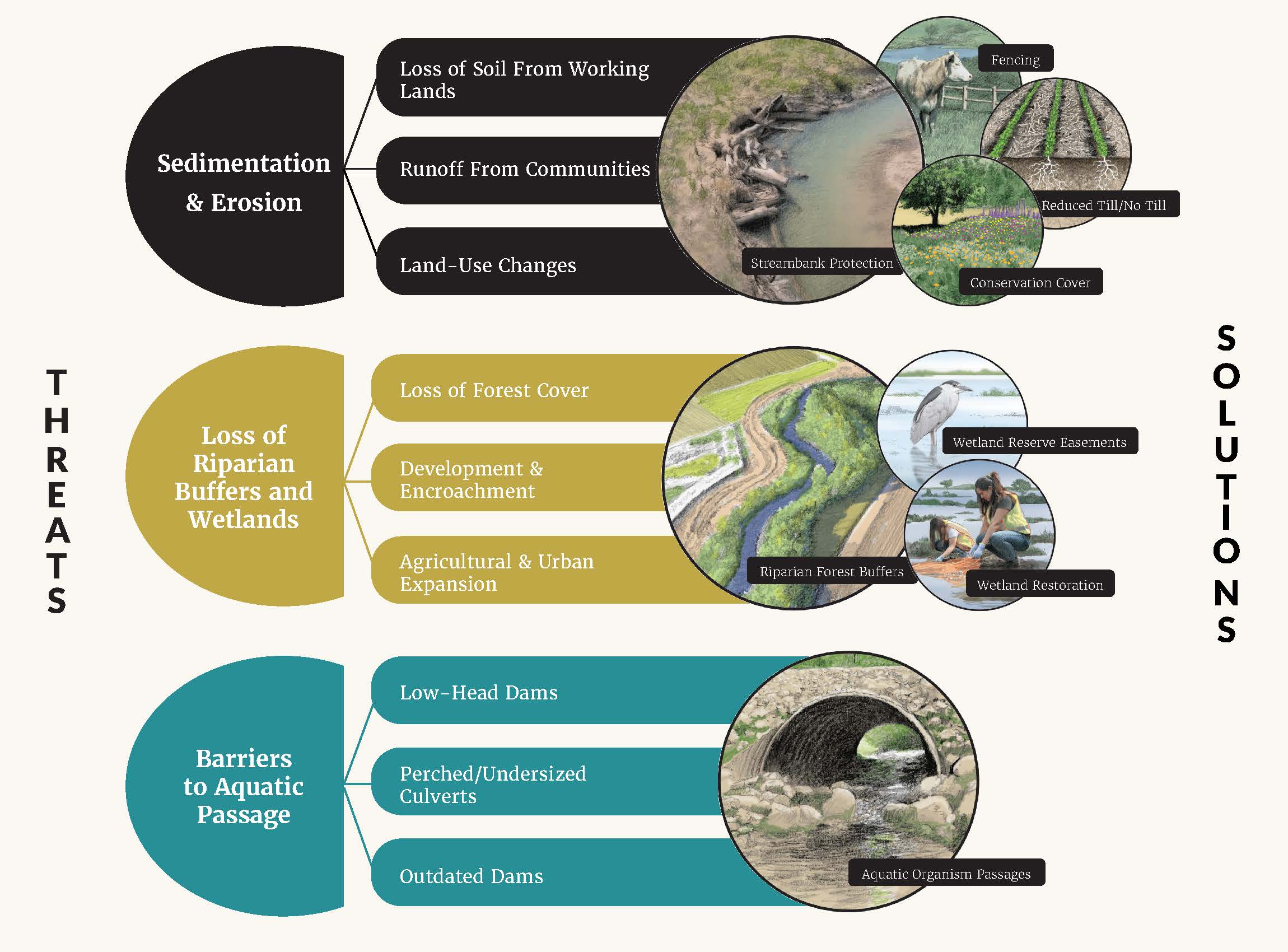
The Aquatic Connectivity Framework is focused on 3 Key Threats:
On The Ground Conservation Projects
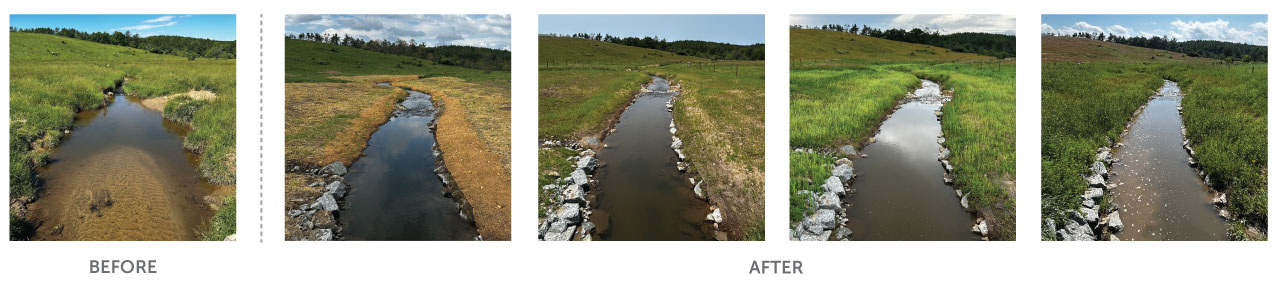
Piney Creek
A restoration of approximately 2,000 linear feet of stream and 4 acres of riparian habitat on Piney Creek in Virginia using a combined approach of streambank stabilization, in-stream structure installation, and native vegetation establishment. The goal of this project was to decrease impacts of seasonal flooding and accelerated erosion experienced by the landowner resulting from intense upland clear-cutting; in turn improving stream hydraulics, enhancing riparian function, and conserving natural resources.
Walker Creek
A restoration of approximately 600 linear feet of streambank and 3 acres of riparian habitat on Walker Creek in Virginia centered on streambank stabilization and native vegetation establishment. Being situated on the outside of a meander and downstream from an undersized bridge crossing, the goal of this project is to combat accelerated bank erosion experienced by the landowner and exacerbated by the impacts of Hurricane Helene. This will allow the landowner to return the land to production and improve overall riparian health and function.
Middle Fork Holston River
A restoration of approximately 2,500 linear feet of stream and 6 acres of riparian habitat on the Middle Fork Holston River in Virginia focused on streambank stabilization and habitat establishment. In addition to streambank stabilization practices for accelerated erosion, the project site is located within the range of the Eastern Hellbender (Cryptobranchus alleganiensis) and favorable in-stream rock clusters were placed throughout the channel to serve as habitat and foster future research opportunities.
Sower Mill Dam Removal
A century-old safety hazard is gone from Little River in Floyd County, Virginia. Through a partnership between WLFW Aquatic Connectivity Framework and the Virginia Department of Wildlife Resources, the Sowers Mill Dam was safely removed this year, restoring free-flowing conditions for the first time since 1836. The concrete structure had created dangerous rapids that caused multiple drownings and blocked passage for species including New River Shiner, Kanawha Minnow, and Kanawha Darter. WLFW ACF Coordinator Josselyn Lucas leveraged the partnership network between the ACF and the Southeast Aquatic Resources Partnership's Virginia Aquatic Connectivity Team to connect with DWR biologist Louise Finger, who secured State Wildlife Grant funding. WLFW engineers Frank Wagner and Zack Edwards provided surveys and construction expertise. By keeping all material on site and having Edwards operate the equipment, the team completed the removal for under $50,000, a 75% reduction from traditional estimates, at no cost to the landowner. The project restored natural stream morphology, reopened aquatic habitat, eliminated the recreational hazard, and cleared the way for planned NRCS conservation work, demonstrating how ACF-SARP collaboration creates a replicable partnership model for dam removals across WLFW aquatic framework areas.

Sower Mill Dam removal project - before.

Sower Mill Dam removal project - during dam removal.

Sower Mill Dam removal project - after dam removal.
Key Accomplishments of the ACF in 2025:
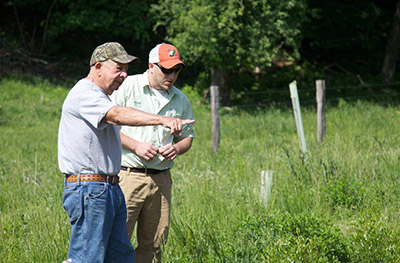
Since 2024, ACF has secured approximately $2.6 million in funding, which has created 12 new conservation delivery positions and supports a total of 19 technical assistance roles. These positions place aquatic systems biology and water resources engineering experts in affiliate roles with NRCS state and district offices, providing on-the-ground support to advance aquatic conservation goals across the Southeast. In addition, the ACF has supported the creation of the following.
Private Land Biologist (PLB) & Private Land Engineer (PLE) Support Teams
Connectivity frameworks require strong implementation with the necessary technical expertise. As part of the ACF, NRCS offices will receive extra capacity across ACF priority regions from PLB & PLE teams, who respectively focus on biological support and engineering & design.
Learn More→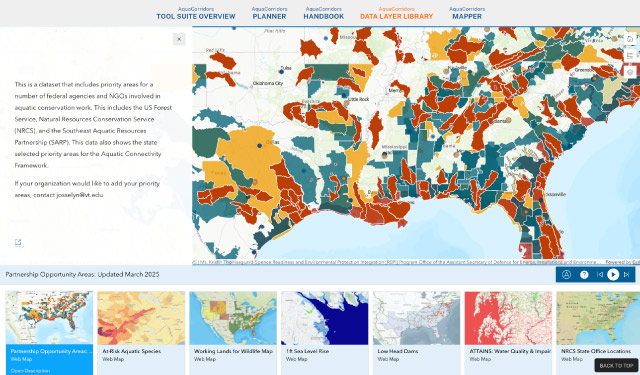
The AquaCorridor Tool Suite
In 2025 we continued to refine and promote a set of decision support tools that:
- Provide information about at-risk species and habitat conditions by watershed.
- Show where WLFW and partners are working and how to collaborate
- Assist users in selecting the best NRCS conservation practices for a given set of resource concerns or threats
- Assist users preparing grant applications and proposals
- Explain and direct users to NRCS/FSA funding mechanisms
Visit Tool Suite →
Posters Explaining Aquatic Framework Conservation Actions
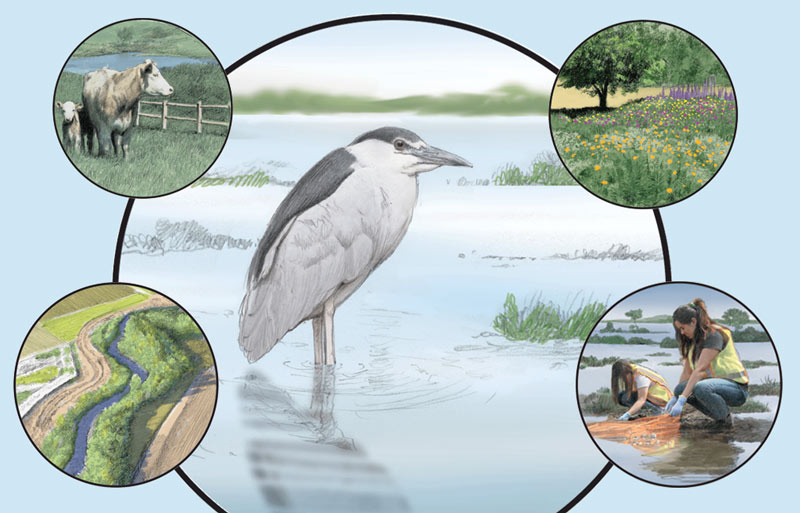
In 2025, children’s book illustrator Erick Ingraham was commissioned to diagram the 8 key conservation actions that the aquatic conservation framework is advocating and implementing. These posters are currently available to download for 5 distinct audiences.
Including:
- General Public
- State Agencies
- Private Landowners
- Media Outlets
- Technical Partners
View Posters →
Developing Partnerships
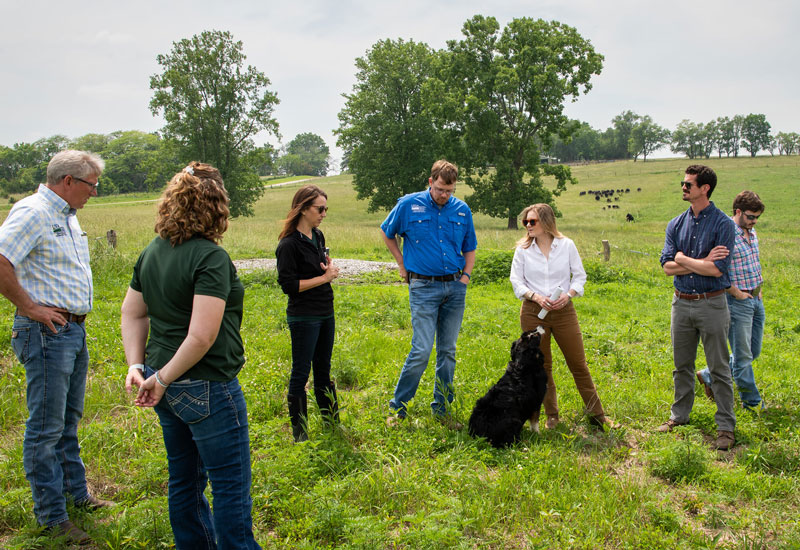
The Aquatic Connectivity Framework has developed strategic partnerships that connect federal conservation programs with regional expertise to address land use conversion, agricultural runoff, water temperature, and aquatic barriers across working landscapes. ACF has so far developed partnerships with:
- Southeast Aquatic Resources Partnership (SARP) for barrier assessment and technical coordination State Wildlife Agencies
- Conservation NGOs, including the North Carolina Coastal Federation and American Rivers
- Academic Institutions such as the University of Georgia's River Basin Institute
- Partnership Programs like Sentinel Landscapes
View ACF Partnerships →
Resources Funded by ACF
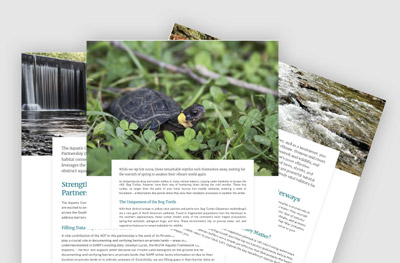
Stories + News about Aquatic Conservation
As part of the ACF framework we released a number of stories covering tactics of aquatic conservation and the efforts of ACF partners. We also post news stories from our ACF partners.
Read News →
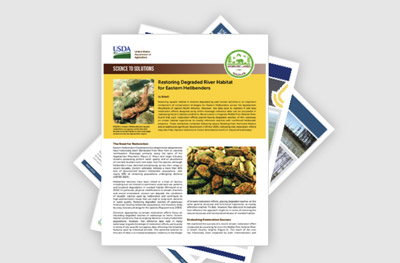
Science Briefs
Short summations of the best available science to inform aquatic conservation.
- Storage and Release of Water in Coastal Plain Wetlandscapes (CEAP Report)
- Maximizing the Water Quality Benefits of Wetlands in Croplands (CEAP Report)
- Restoring Degraded River Habitat for Eastern Hellbenders (Science to Solutions)
Visit Library →
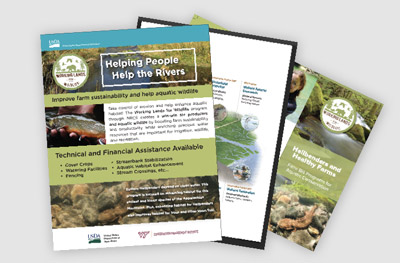
Outreach Materials
Brochures, Fact Sheets and Printouts that can be used by NRCS and our partners to spread knowledge about aquatic conservation.
- Hellbender and Healthy Farms Brochure
- Working for Healthy Waterways and Farmlands: ACF Fact Sheet
- Helping People Help The Rivers: WLFW Info Sheet
View Materials →